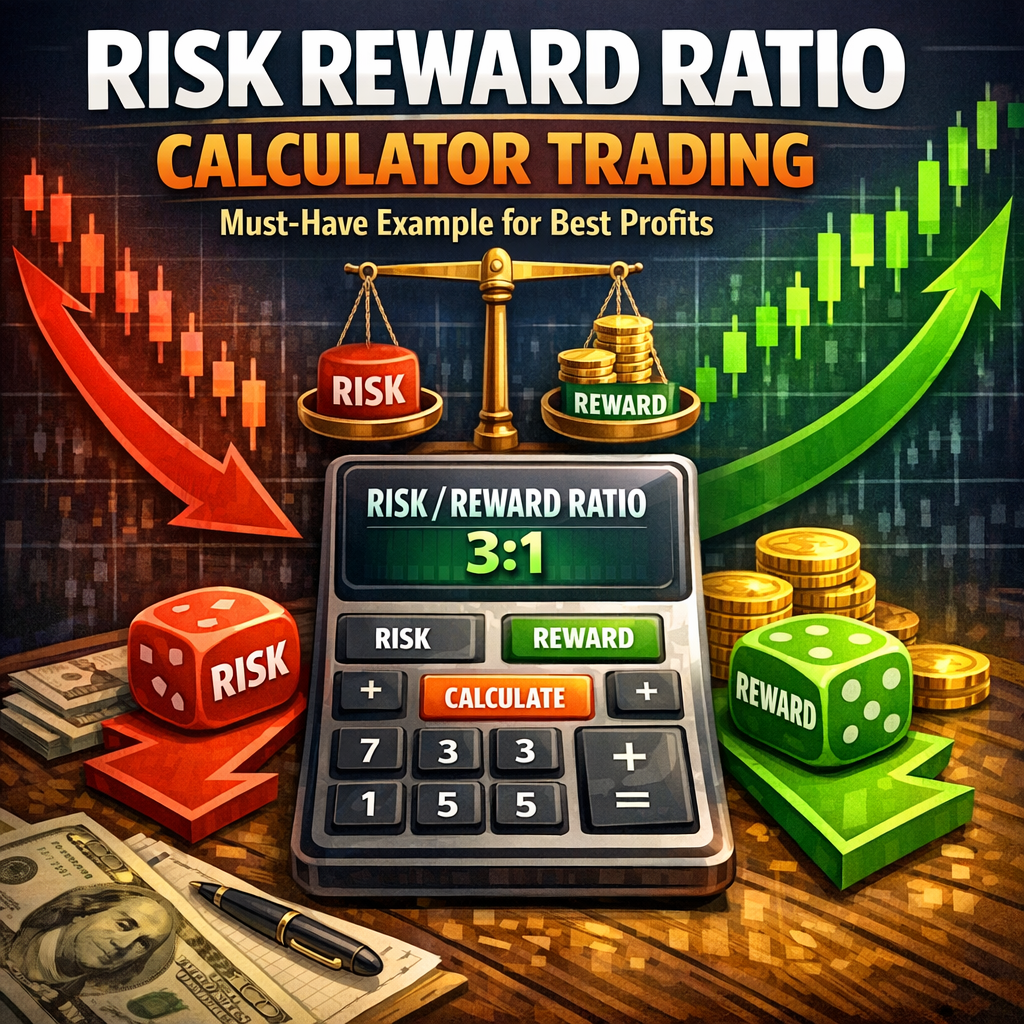
- What is a Risk Reward Ratio Calculator?
- Why is the Risk Reward Ratio Important in Trading?
- How to Calculate the Risk Reward Ratio?
- Risk Reward Ratio Calculator Trading Example
- Example Scenario
- Step 1: Calculate the Risk
- Step 2: Calculate the Reward
- Step 3: Calculate the Risk Reward Ratio
- Using a Risk Reward Ratio Calculator Tool
- Integrating Risk Reward Ratio Calculator Trading into Your Strategy
- Final Thoughts
Understanding Risk Reward Ratio Calculator Trading Example: A Practical Guide
In the fast-paced world of trading, managing risk and reward effectively is paramount to long-term success. One of the essential tools traders use to balance potential losses against possible gains is the risk reward ratio calculator. This article will provide a detailed explanation of the risk reward ratio calculator trading concept using a practical example, helping you understand how to apply it in your trading strategy.
What is a Risk Reward Ratio Calculator?
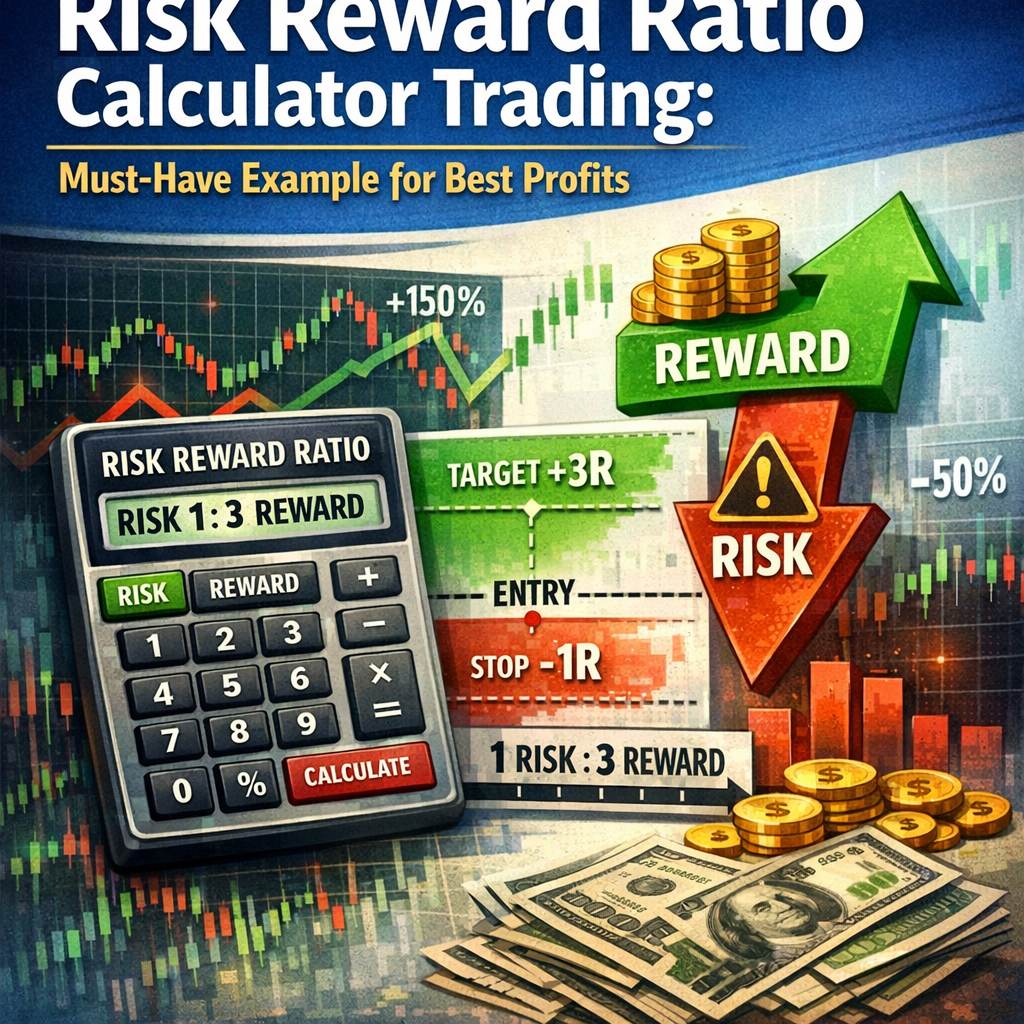
A risk reward ratio calculator is a simple yet powerful tool that helps traders quantify the amount they risk on a trade compared to the potential reward they expect to earn. This ratio is vital because it guides traders in making informed decisions, ensuring that the potential profit justifies the risk taken.
Typically, the ratio is expressed as a numerical value or a ratio such as 1:3, meaning for every unit of risk, the trader aims to gain three units of reward. Understanding this ratio enables traders to evaluate trades before entering and helps maintain discipline in sticking to well-planned setups.
Why is the Risk Reward Ratio Important in Trading?
Traders face uncertainty and volatility, making it necessary to manage how much capital is at risk on each trade. The risk reward ratio plays a critical role in:
- Protecting capital: By limiting the amount risked per trade, traders reduce the chances of significant losses.
- Optimizing profits: It encourages looking for trades with potential gains that exceed likely losses.
- Enhancing consistency: Using a consistent ratio helps establish a disciplined approach, vital for long-term profitability.
A common wisdom in trading is to aim for a risk reward ratio of at least 1:2, which means the potential reward is twice the risk.
How to Calculate the Risk Reward Ratio?
The risk reward ratio calculation involves three key components:
- Entry Price: Where you initiate the trade.
- Stop-loss Price: The pre-determined price level where you’ll exit the trade to limit losses.
- Target Price: The price level where you aim to take profits.
The formula is:
Risk Reward Ratio = (Entry Price – Stop Loss) / (Target Price – Entry Price)
- For long positions, risk is the distance from entry to stop loss, and reward is from entry to the target price.
- For short positions, the calculation is reversed appropriately.
Risk Reward Ratio Calculator Trading Example
Let’s consider a practical example to illustrate the use of the risk reward ratio calculator trading concept.
Example Scenario
Imagine you’re trading a stock currently priced at $50 per share. After analysis, you decide:
- Entry Price: $50
- Stop-Loss Price: $47 (3 points below entry)
- Target Price: $56 (6 points above entry)
Step 1: Calculate the Risk
Risk per share = Entry Price – Stop-Loss Price
Risk = $50 – $47 = $3
This means your maximum loss per share is $3 if the trade hits the stop-loss.
Step 2: Calculate the Reward
Reward per share = Target Price – Entry Price
Reward = $56 – $50 = $6
This means if the stock reaches the target price, your gain per share will be $6.
Step 3: Calculate the Risk Reward Ratio
Risk Reward Ratio = Risk / Reward
Risk Reward Ratio = $3 / $6 = 0.5
Interpreting this ratio, we see it’s 1:2 (since 0.5 indicates the risk is half the reward). This is a favorable risk-reward ratio because the potential reward is twice your possible loss.
Using a Risk Reward Ratio Calculator Tool
Typically, traders input the entry price, stop-loss, and target price into an online calculator or trading software. The tool instantly presents the ratio, making it easier and more accurate to evaluate trades.
Integrating Risk Reward Ratio Calculator Trading into Your Strategy
Applying risk reward ratio concepts isn’t just about calculating numbers; it’s about integrating the insights into your trading habits.
- Set your stop-loss and target before entering a trade: This removes emotional decision-making during volatile market moves.
- Only take trades that meet your preferred risk reward criteria: This ensures trades have positive expectancy.
- Combine with win rate: Even if your win rate is moderate, a good risk reward ratio can keep you profitable.
- Adjust position size to control risk: Based on your calculated risk, determine how many shares or contracts to trade.
Final Thoughts
A risk reward ratio calculator trading example illustrates the simplicity and importance of this tool for effective trading. By quantifying potential risks and rewards before opening a position, you empower yourself to make disciplined, well-informed decisions that protect capital and maximize profits. Whether you’re a beginner or an experienced trader, consistently applying a risk reward framework combined with solid trade analysis is a cornerstone of successful trading.
Use this method alongside your trading plan to create a balanced approach that can help you navigate the uncertainties of various financial markets confidently. Just as the example showed, even a straightforward calculation can have a profound impact on your trading outcomes.
📱 Calculate Instantly with FinLaa
Access 116+ financial calculators — EMI, SIP, tax, mortgage & more — completely free. Works offline too.
iPhone · iPad · Mac · Apple Vision Pro
📚 Related Articles
🔗 Official Resources
Author

rahulbachioppo@gmail.com
Related Posts

how to check if I can afford to buy a house
Financial literacy is the skill of managing your money effectively. This tool helps you make data-backed decisions. In this guide, we explore...
Read out all
how much insurance cover do I need for my family
Financial literacy is the skill of managing your money effectively. This tool helps you make data-backed decisions. In this guide, we explore...
Read out all
how to plan financially for a baby
Financial literacy is the skill of managing your money effectively. This tool helps you make data-backed decisions. In this guide, we explore...
Read out all
DeFi yield farming calculator with APY and APR
Financial literacy is the skill of managing your money effectively. This tool helps you make data-backed decisions. In this guide, we explore...
Read out all
net worth calculator with assets and liabilities
Financial literacy is the skill of managing your money effectively. This tool helps you make data-backed decisions. In this guide, we explore...
Read out all
PF withdrawal calculator after resignation
Financial literacy is the skill of managing your money effectively. This tool helps you make data-backed decisions. In this guide, we explore...
Read out all