- What Is the Expense Ratio in Mutual Funds?
- Why Include the Expense Ratio in a Mutual Fund Return Calculator?
- How to Use a Mutual Fund Return Calculator with Expense Ratio
- Example: Calculating Mutual Fund Returns with Expense Ratio
- Scenario Details:
- Step 1: Calculate the net annual return
- Step 2: Calculate the future value without considering the expense ratio
- Step 3: Calculate the future value considering the expense ratio
- Result Interpretation
- Additional Factors to Consider When Using a Mutual Fund Return Calculator Expense Ratio
- Conclusion
Understanding the Mutual Fund Return Calculator Expense Ratio: A Practical Example
When investing in mutual funds, one of the most important aspects to consider is how fees and expenses impact your overall returns. A mutual fund return calculator expense ratio tool can help investors better understand the net returns by factoring in the expense ratio — an essential component that often goes unnoticed but significantly affects investment growth.
In this article, we will explore what the expense ratio is, why it matters, and how a mutual fund return calculator that includes the expense ratio can provide a clearer picture of your investment performance. We will also walk you through a practical example to demonstrate its importance.
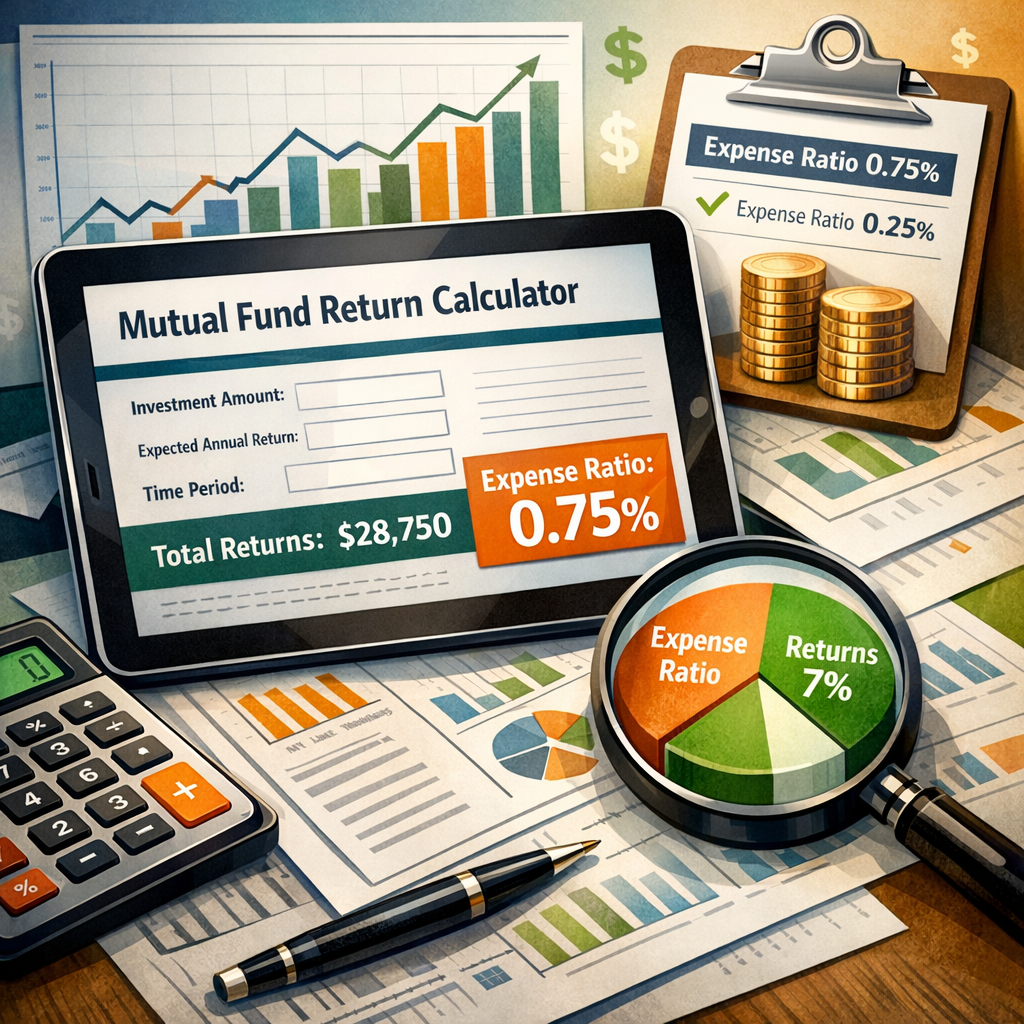
What Is the Expense Ratio in Mutual Funds?
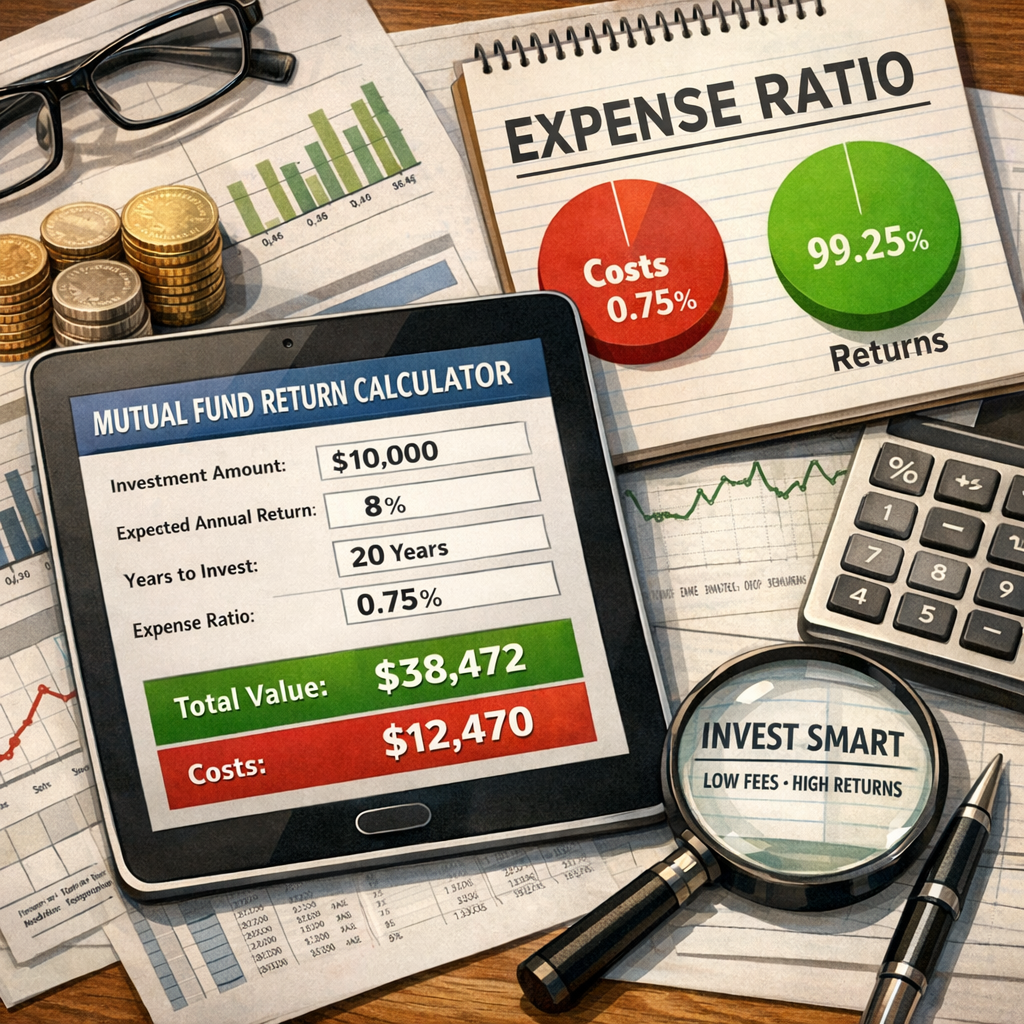
The expense ratio is the annual fee charged by a mutual fund company to manage and operate the fund. It covers costs such as management fees, administrative expenses, and other operational costs. This fee is expressed as a percentage of the fund’s average assets under management (AUM).
For example, if a mutual fund has an expense ratio of 1%, it means that 1% of your investment value will be deducted annually to cover these fees. While 1% might seem small, over many years, this cost can substantially reduce your returns.
Why Include the Expense Ratio in a Mutual Fund Return Calculator?
When calculating returns on a mutual fund investment, it is crucial to distinguish between gross returns (the fund’s performance before fees) and net returns (the actual amount you will receive after all fees are deducted).
Many return calculators only show historical or projected gross returns, which can give an overly optimistic view of investment performance. Incorporating the expense ratio into a mutual fund return calculator lets investors estimate realistic net returns, helping them make informed decisions and compare funds more effectively.
How to Use a Mutual Fund Return Calculator with Expense Ratio
Using a specialized calculator typically involves inputting the following information:
- Initial investment amount
- Expected annual return (usually gross return before fees)
- Expense ratio of the mutual fund
- Investment period (number of years)
- Additional contributions (if any) during the investment period
The calculator then adjusts the projected returns by deducting the expense ratio each year, showing the net value of your investment over time.
Example: Calculating Mutual Fund Returns with Expense Ratio
Let’s consider a basic example to demonstrate how the expense ratio affects your returns.
Scenario Details:
- Initial investment: $10,000
- Expected annual gross return: 8%
- Expense ratio: 1.25%
- Investment period: 20 years
- No additional contributions
Step 1: Calculate the net annual return
The net return will be the gross return minus the expense ratio:
Net Return = Gross Return - Expense Ratio
Net Return = 8% - 1.25% = 6.75%
Step 2: Calculate the future value without considering the expense ratio
Using the compound interest formula:
[
FV = P times (1 + r)^n
]
Where:
- (P = 10,000) (initial investment)
- (r = 0.08) (8% annual growth)
- (n = 20) years
[
FV = 10,000 times (1 + 0.08)^{20} = 10,000 times 4.66 = 46,610
]
So, without considering fees, the investment would grow to approximately $46,610.
Step 3: Calculate the future value considering the expense ratio
Using the net return of 6.75%:
[
FV = 10,000 times (1 + 0.0675)^{20} = 10,000 times 3.69 = 36,900
]
With the expense ratio factored in, your investment grows to about $36,900, which is roughly $9,710 less than the gross return scenario.
Result Interpretation
This example clearly shows how even a seemingly small expense ratio of 1.25% can significantly reduce your investment growth over time, underscoring the importance of including expense ratios in return calculations.
Additional Factors to Consider When Using a Mutual Fund Return Calculator Expense Ratio
While expense ratio is critical, several other factors can influence your mutual fund returns:
- Load Fees: Some funds charge entry or exit fees that impact net returns.
- Taxes: Capital gains and dividend taxes can reduce the actual returns you receive.
- Market Volatility: Real returns can fluctuate year to year; hence, calculators often use average expected returns.
- Fund Performance: Not all funds achieve their stated expected returns; thorough fund research is necessary.
Conclusion
Utilizing a mutual fund return calculator expense ratio enables you to gain a transparent and realistic view of your potential investment growth by accounting for fund management fees. The example above illustrates the tangible impact that expense ratios can have on your final returns, which reinforces the importance of choosing funds with reasonable expense ratios and incorporating these fees in your financial planning.
Investing with clarity will lead to better decisions, smarter portfolios, and, ultimately, improved wealth accumulation. Whether you are starting your investment journey or reviewing your existing portfolio, make sure to use return calculators that factor in expense ratios — your future self will thank you!
📱 Calculate Instantly with FinLaa
Access 116+ financial calculators — EMI, SIP, tax, mortgage & more — completely free. Works offline too.
iPhone · iPad · Mac · Apple Vision Pro
📚 Related Articles
Author

rahulbachioppo@gmail.com
Related Posts

how much should I invest every month to become rich
Wealth creation is a marathon, not a sprint. Smart investing is about time in the market, not timing the market. In this...
Read out all
what is SIP and should I start one now
Wealth creation is a marathon, not a sprint. Smart investing is about time in the market, not timing the market. In this...
Read out all
should I prepay my loan or invest the extra money
Taking a loan is a big commitment. Whether it’s for a home, car, or personal use, valid calculation is your first defense...
Read out all
SIP and EMI calculator step by step explanation
Taking a loan is a big commitment. Whether it’s for a home, car, or personal use, valid calculation is your first defense...

how to start investing in mutual funds for beginners
Wealth creation is a marathon, not a sprint. Smart investing is about time in the market, not timing the market. In this...
Read out all
tell me how compound interest works
Taking a loan is a big commitment. Whether it’s for a home, car, or personal use, valid calculation is your first defense...
Read out all