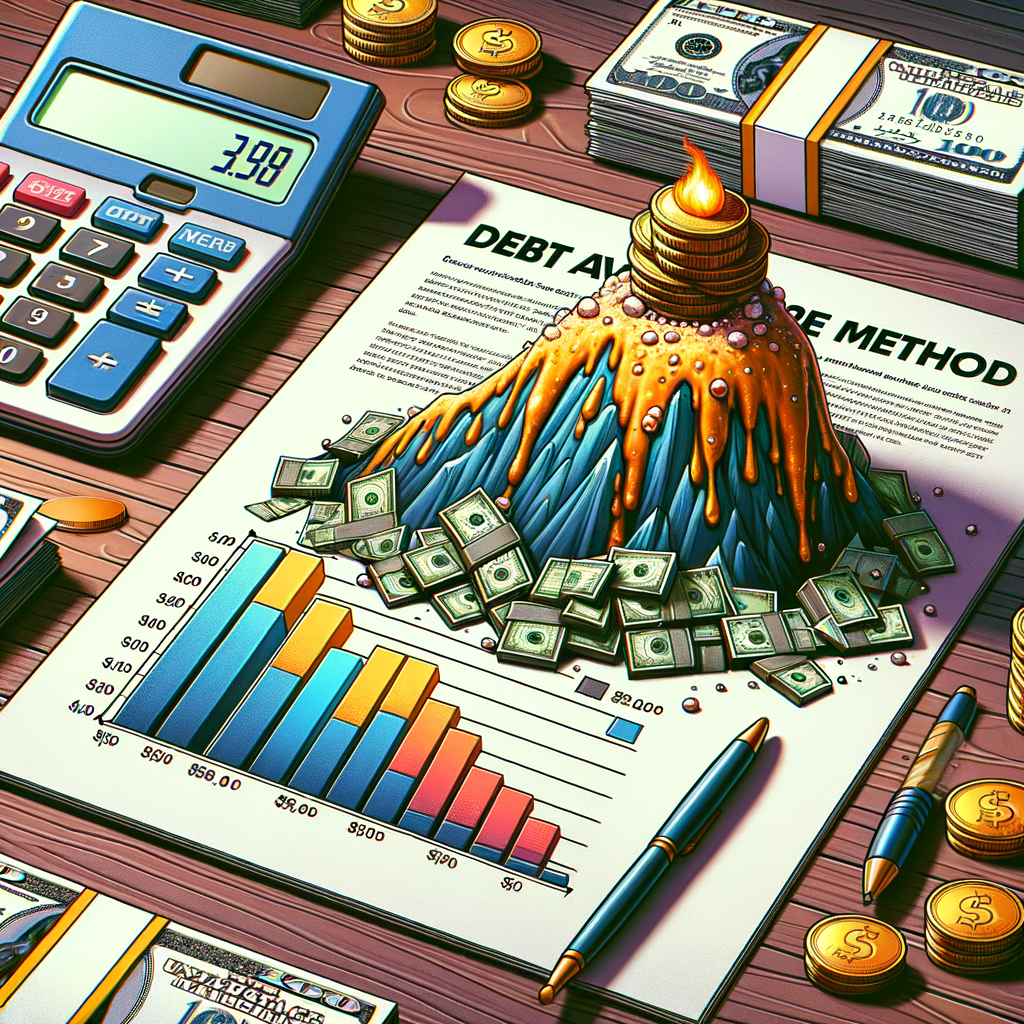
- What Is the Debt Avalanche Method?
- How Debt Avalanche Differs from Debt Snowball
- How the Debt Avalanche Method Works
- Why Use a Debt Avalanche Method Calculator?
- Debt Avalanche Method Calculator Example
- Step 1: Organize Your Debts by Interest Rate
- Step 2: Calculate Minimum Payments
- Step 3: Determine Your Total Monthly Payment
- Step 4: Apply the Debt Avalanche Method
- Step 5: Calculate How Fast Debts Will Be Paid Off
- Summary Timeline:
- Interest Savings
- Tools for Using the Debt Avalanche Method
- Tips for Paying Off Debt Faster with the Debt Avalanche Method
- 1. Automate Payments
- 2. Increase Extra Payments When Possible
- 3. Temporarily Cut Expenses
- 4. Avoid New Debt
- 5. Track Your Progress
- Common Questions About the Debt Avalanche Method
- Will the Debt Avalanche Method Work If I Have Many Debts?
- What If Paying Only Minimums on Other Debts Feels Frustrating?
- Can I Switch to Debt Snowball If I Need Motivation?
- Conclusion
Debt Avalanche Method Calculator Example: How to Pay Off Debt Fast
Paying off debt can feel overwhelming, especially when you have multiple loans or credit card balances with varying interest rates. The debt avalanche method is a proven strategy to reduce your debt faster and save money on interest payments. This article will walk you through how the debt avalanche method works, provide a debt avalanche method calculator example, and offer useful tips to pay off debt efficiently.
—
What Is the Debt Avalanche Method?

The debt avalanche method prioritizes paying off debts with the highest interest rates first, while making minimum payments on all other debts. Once the highest-interest debt is eliminated, you move on to the next highest-rate balance. This approach minimizes the total interest paid over time and helps you become debt-free more quickly.
How Debt Avalanche Differs from Debt Snowball
– Debt Avalanche: Pay off highest interest rate debts first.
– Debt Snowball: Pay off smallest balance debts first.
While the debt snowball method can motivate you by quickly closing accounts, the avalanche method is more financially efficient, saving you more money in the long run.
—
How the Debt Avalanche Method Works
Here are the basic steps to implement the debt avalanche method:
1. List all your debts with interest rates and balances.
2. Pay the minimum on all debts except the one with the highest interest rate.
3. Put any extra money toward that highest-interest debt.
4. Once that debt is fully paid, redirect payments to the next highest interest rate debt.
5. Repeat until all debts are gone.
—
Why Use a Debt Avalanche Method Calculator?
Managing multiple debts and figuring out the payoff timeline manually can be complicated. A debt avalanche method calculator helps by:
– Calculating month-by-month payments.
– Showing how much interest you’ll save.
– Providing an estimated debt-free date.
– Allowing you to experiment with different extra payment amounts.
—
Debt Avalanche Method Calculator Example
Let’s consider a scenario where you have the following debts:
| Debt | Balance | Interest Rate (APR) | Minimum Payment |
|———————-|———-|———————|—————–|
| Credit Card A | $5,000 | 20% | $150 |
| Personal Loan | $8,000 | 10% | $200 |
| Credit Card B | $3,000 | 15% | $100 |
You have an extra $300 each month to put toward your debt payments beyond the minimums.
—
Step 1: Organize Your Debts by Interest Rate
Order debts by the highest to lowest interest rate:
1. Credit Card A (20%)
2. Credit Card B (15%)
3. Personal Loan (10%)
—
Step 2: Calculate Minimum Payments
Minimum payments total:
– Credit Card A: $150
– Credit Card B: $100
– Personal Loan: $200
Total minimums = $450
—
Step 3: Determine Your Total Monthly Payment
You plan to pay $450 (minimums) + $300 (extra) = $750/month toward debt.
—
Step 4: Apply the Debt Avalanche Method
– Pay the minimum on all debts except Credit Card A.
– Add the $300 extra payment to Credit Card A’s minimum payment.
| Debt | Payment per Month |
|—————-|——————–|
| Credit Card A | $150 + $300 = $450 |
| Credit Card B | $100 |
| Personal Loan | $200 |
—
Step 5: Calculate How Fast Debts Will Be Paid Off
Using an online debt avalanche calculator or spreadsheet:
– Credit Card A will be paid off in approximately 12 months.
– After Credit Card A is paid, redirect the $450 payment to Credit Card B.
– Credit Card B will be paid off in about 7 months.
– Finally, apply the total $750 payment to the Personal Loan.
– The Personal Loan will be cleared in around 12 months.
—
Summary Timeline:
| Debt | Months to Pay Off |
|—————-|———————|
| Credit Card A | 12 months |
| Credit Card B | 7 months (after A) |
| Personal Loan | 12 months (after B) |
Total payoff time: approx. 31 months (2 years 7 months)
—
Interest Savings
By focusing on the highest interest debt first, you reduce the balance that accrues the most interest more quickly, resulting in savings. Compared to paying debts off in order of balance size (debt snowball), you can save hundreds or even thousands of dollars in interest.
—
Tools for Using the Debt Avalanche Method
Here are some popular calculators and apps that help you implement this method efficiently:
– Undebt.it – A free online tool for managing debts and creating payoff plans.
– ReadyForZero – Provides payoff timelines and tracks progress.
– EveryDollar – Budgeting app that can help allocate dollars to debts.
– Tally – Focuses on credit card management and payoff optimization.
—
Tips for Paying Off Debt Faster with the Debt Avalanche Method
1. Automate Payments
Set up automatic payments to avoid late fees and ensure consistent progress.
2. Increase Extra Payments When Possible
Any windfalls like bonuses, tax refunds, or side income should go toward extra debt payments to accelerate payoff.
3. Temporarily Cut Expenses
Look for non-essential spending cuts (e.g., subscriptions, dining out) to free extra money.
4. Avoid New Debt
Keep credit card balances low and avoid taking on new loans during repayment.
5. Track Your Progress
Regularly use debt calculators or spreadsheets to monitor your progress and stay motivated.
—
Common Questions About the Debt Avalanche Method
Will the Debt Avalanche Method Work If I Have Many Debts?
Yes, the method is especially effective if you have multiple debts with varying interest rates because it identifies the most costly debt first.
What If Paying Only Minimums on Other Debts Feels Frustrating?
This is common, but try to focus on the interest savings and the faster payoff timeline to stay motivated.
Can I Switch to Debt Snowball If I Need Motivation?
Absolutely. The best method is the one you stick with. If motivation lags, you can start with snowball and transition to avalanche later.
—
Conclusion
The debt avalanche method is a smart and financially savvy way to pay off your debts faster, especially when you have high-interest loans or credit cards. By targeting the highest interest debt first, you minimize the total interest paid and shorten your debt repayment timeline.
Using a debt avalanche method calculator example, you can see exactly how to allocate your monthly payments, how long each debt will take, and the interest you can save. Automate your payments, increase your extra payments whenever possible, and keep track of your progress to stay on the path to financial freedom.
Start planning today with a debt avalanche calculator and take the fastest route to becoming debt-free!
📱 Calculate Instantly with FinLaa
Access 116+ financial calculators — EMI, SIP, tax, mortgage & more — completely free. Works offline too.
iPhone · iPad · Mac · Apple Vision Pro
📚 Related Articles
🔗 Official Resources
Author

rahulbachioppo@gmail.com
Related Posts
how can I pay off my credit card debt faster
Taking a loan is a big commitment. Whether it’s for a home, car, or personal use, valid calculation is your first defense...
Read out all
AI debt management advisor for credit repair
Taking a loan is a big commitment. Whether it’s for a home, car, or personal use, valid calculation is your first defense...
Read out all
how to become debt free calculator with timeline
Taking a loan is a big commitment. Whether it’s for a home, car, or personal use, valid calculation is your first defense...
Read out all
debt to income ratio calculator for loan eligibility
Taking a loan is a big commitment. Whether it’s for a home, car, or personal use, valid calculation is your first defense...
Read out all
credit card payoff calculator with minimum payment
Taking a loan is a big commitment. Whether it’s for a home, car, or personal use, valid calculation is your first defense...
Read out all
debt snowball vs debt avalanche which is faster
Taking a loan is a big commitment. Whether it’s for a home, car, or personal use, valid calculation is your first defense...
Read out all